
Copy updated 6 September 2026. Routes, aircraft assignments, and viewing access can change; verify the flight and local rules before travelling.
The first United A321XLR routes now have dates. United says selected domestic flying begins in September 2026, followed by international service from Washington Dulles to Amsterdam and Dublin on 1 December. Five newly announced European routes follow in 2027.
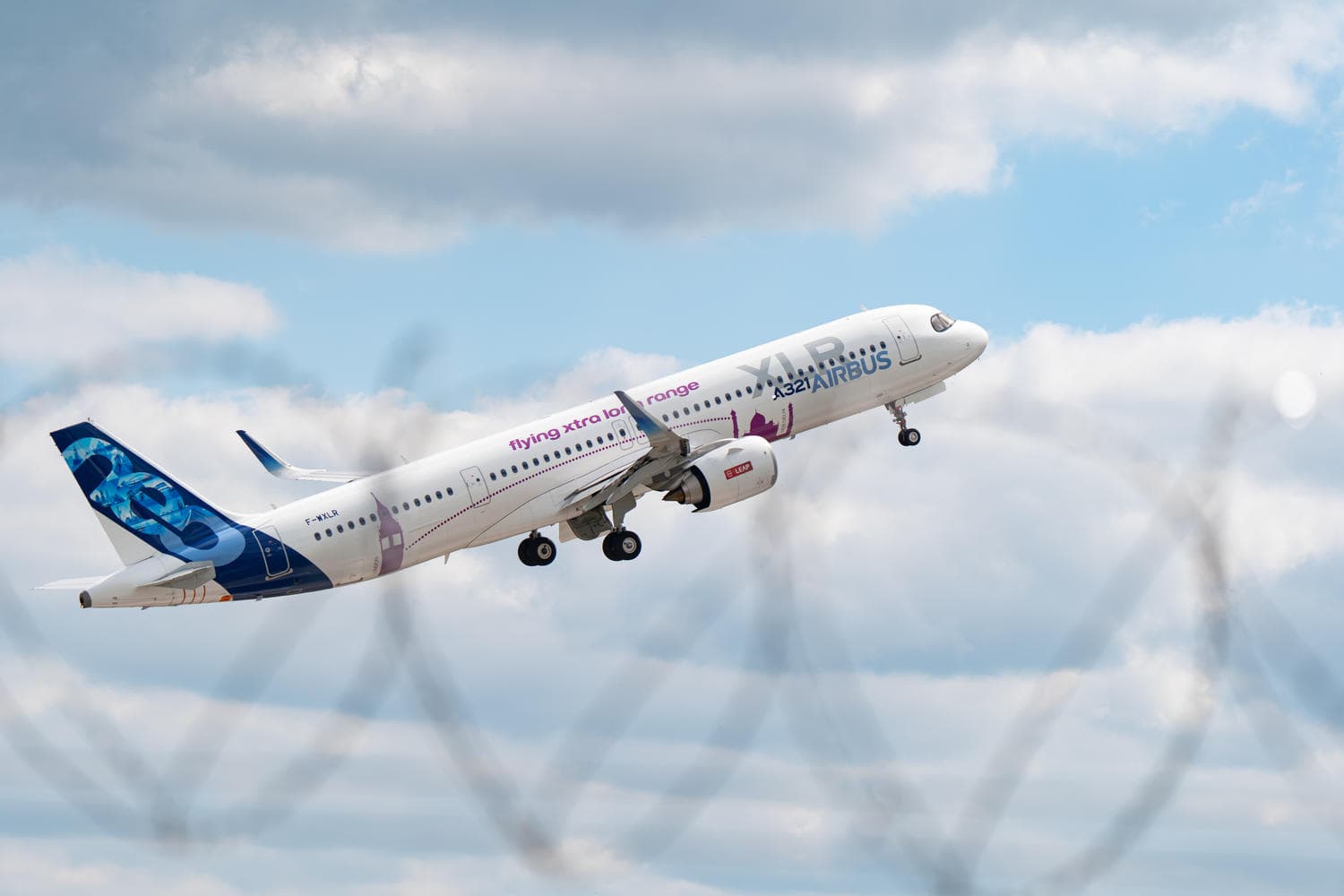
That creates a useful spotting target, but also an identification trap: the XLR looks much like United's standard A321neo. A strong sighting record needs the airport, time, and registration, not just a long-range route or an A321-shaped silhouette.
In short
- United says selected domestic A321XLR flying starts in September 2026, but it has not named those domestic routes.
- First international services are Washington Dulles–Amsterdam and Washington Dulles–Dublin from 1 December 2026.
- Newark and Dulles gain five named A321XLR routes to Europe during spring and summer 2027.
- The FAA lists N64321 as a United A321-271NY; use the tail number because visual XLR clues are subtle.
United A321XLR rollout: what is confirmed
On 25 August 2026, United announced its largest international network expansion and debuted the "Born to Explore" A321XLR at Newark. The airline set out three rollout stages:
- September 2026: selected domestic flights for the new type. United did not identify the domestic city pairs in the announcement.
- 1 December 2026: first international flights, from Washington Dulles to Amsterdam and Dublin.
- April to June 2027: five new A321XLR routes from Newark and Dulles to secondary European cities.
All new routes remain subject to government approval. Aircraft assignments can also change for maintenance or operational reasons, so a route is a search area rather than proof of type.
Confirmed United A321XLR international routes
This table includes only routes that United explicitly assigned to the A321XLR in its 25 August release. "Not stated" means the launch release did not publish a frequency for the first two services.
| Origin | Destination | Start | Frequency |
|---|---|---|---|
| Washington Dulles (IAD) | Amsterdam (AMS) | 1 Dec 2026 | Not stated |
| Washington Dulles (IAD) | Dublin (DUB) | 1 Dec 2026 | Not stated |
| Newark (EWR) | Luxembourg (LUX) | 2 Apr 2027 | Daily |
| Washington Dulles (IAD) | Toulouse (TLS) | 26 Apr 2027 | Daily |
| Newark (EWR) | Ibiza (IBZ) | 31 May 2027 | 4 weekly |
| Newark (EWR) | Valencia (VLC) | 2 Jun 2027 | 3 weekly |
| Newark (EWR) | Marseille (MRS) | 4 Jun 2027 | Daily |
Where to spot United's A321XLR
Washington Dulles: the first clear base
Dulles (IAD) offers the strongest confirmed opportunity from 1 December because both initial international routes begin there. The Smithsonian's Donald D. Engen Observation Tower provides a public 360-degree view of Dulles arrivals and departures. Check its opening hours before visiting.
Amsterdam and Dublin: repeat arrival chances
Amsterdam Schiphol (AMS) and Dublin (DUB) become the first named overseas destinations. Schiphol publishes free Polderbaan and Buitenveldertbaan spotter zones; runway use determines which one is useful. Dublin Airport says its existing south-runway viewing area remains an enthusiast gathering point while a new aircraft observation facility is developed.
Schiphol also appears in our guide to the best airports for plane spotting. Use that for general planning, then confirm United's operating type close to the movement.
Newark: important, but not a promise
United unveiled the aircraft at Newark (EWR), and four of the five new 2027 XLR routes start there. The Port Authority does not publish a designated Newark spotting area, so use legal public locations and never enter restricted airport property. Its official WebTrak can help confirm general aircraft movements, but it is not an airline schedule.
How to identify a United Airbus A321XLR
Start with the honest answer: from many angles, you cannot reliably separate an A321XLR from a standard A321neo by eye. Both share the long A321 fuselage, familiar A320-family nose, sharklets, and large new-generation engines. Route length is not an identifier.
- Look beneath the rear fuselage: Airbus says the XLR has a new, larger and reinforced belly fairing protecting its integrated rear centre tank. This is the most useful external variant clue, but it is subtle at normal spotting distance.
- Do not use livery alone: United's "Born to Explore" presentation helps on the debut aircraft, but liveries and decals can change while the structural variant does not.
- Use the registration: read or photograph the tail number, then verify the exact variant in an authoritative registry or current fleet source.
- Keep the whole sighting: record airport, date, time, flight number, direction, and registration so an aircraft swap does not become a false XLR catch.
Airbus's A321XLR certification explainer describes the 12,900-litre rear centre tank and reinforced belly fairing. Its product page lists the type at 44.51 metres long with a range of up to 4,700 nautical miles.
For a more visually distinctive new Airbus, compare our Airbus A350F identification guide. The contrast is useful: the freighter has obvious cargo features, while the XLR demands registration-level verification.
United A321XLR registration: start with N64321
The FAA registry entry for N64321 lists a valid 2026 Airbus A321-271NY registered to United Airlines. It identifies serial number 12581, Pratt & Whitney PW1133GA-JM engines, and Mode S hex code A87318.
That record is stronger evidence than a social caption or route assumption. When more United XLRs enter service, check each tail individually rather than assuming every United A321 on a long route is an XLR. FlightCatcherPro's public aircraft registration photo galleries can also connect a verified registration with community sightings as coverage grows.
A321XLR vs Boeing 757: a gradual spotting change
United ordered 50 A321XLRs. In the original order announcement, Airbus and United described the aircraft as a one-for-one replacement for older, less-efficient models on intercontinental routes. The 2026 launch now shows where that strategy becomes visible.
For spotters, this is not an overnight swap. More XLR deliveries mean more chances to see the new Airbus and fewer routine 757 assignments over time. Keep separate goals: verify the first United XLRs by registration, and check live schedules if you are trying to log a 757 before the fleet transition advances.
Fleet retirements can leave spotters with limited time to photograph a type. Our Lufthansa A340-600 retirement guide applies the same verify-before-travelling approach to a much rarer quadjet.
FAQ: United A321XLR routes and spotting
What are United's first international A321XLR routes?
United says its first international A321XLR services will begin on 1 December 2026 from Washington Dulles to Amsterdam and Dublin. The airline also named five new A321XLR routes for 2027 from Newark or Dulles to Luxembourg, Toulouse, Ibiza, Valencia, and Marseille.
Which domestic routes will United's A321XLR fly?
United says selected domestic A321XLR flying begins in September 2026, but its 25 August announcement did not name the domestic city pairs. Treat any route list published before United files or sells the flights as provisional.
How can I identify a United A321XLR?
A United A321XLR looks extremely similar to the airline's standard A321neo. The XLR has a larger reinforced belly fairing associated with its rear centre fuel tank, but that is a subtle clue. Confirm the registration rather than relying on the silhouette alone.
What is United A321XLR registration N64321?
The FAA registry lists N64321, serial number 12581, as a 2026 Airbus A321-271NY registered to United Airlines. The FAA record also identifies its Mode S hex code as A87318.
Is United retiring every Boeing 757 immediately?
No. The A321XLR supports a gradual fleet transition. United and Airbus describe the type as a replacement for older aircraft, while current reporting says 757s will phase out as more XLRs arrive. Check United's live fleet and schedule before planning a final 757 sighting.
Confirm the tail, identify the aircraft with your camera or a photo, and save it to your collection with FlightCatcherPro. New to the hobby? Start with our plane spotting guide for beginners.